

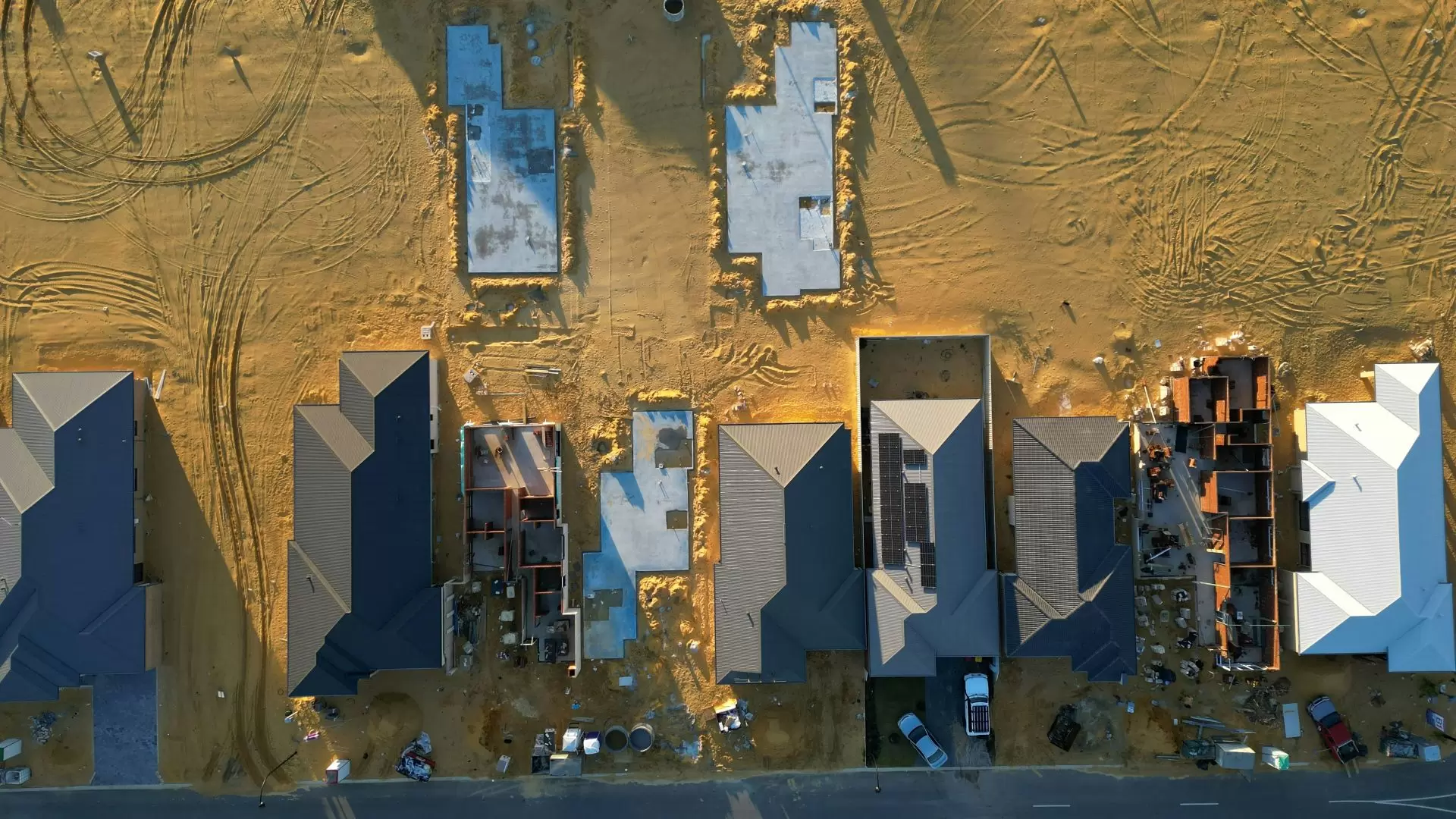
It’s no secret that Australia still needs a lot more homes. But the pipeline that will deliver them is starting to lose some momentum.
The National Housing Supply and Affordability Council’s (NHSAC’s) August update now estimates Australia will reach the National Housing Accord target of 1.2 million new homes in the December quarter of 2030 – three months later than it forecast in April.
At the same time, Housing Industry Association (HIA) data showed sales of new detached homes have been falling. Nationally, sales over the three months to August were 19.3% lower than in the previous quarter.
That might sound like demand for new homes is disappearing. But the underlying picture is more complicated, particularly when Australia still has a significant housing shortage and a growing population.
So what is causing buyers to pull back, and what does it mean if you are considering building or buying off the plan?
This article is general information only and does not constitute financial, legal or tax advice. We recommend seeking advice from a qualified accountant and solicitor before making any decisions.
Australia is building more homes, but not quickly enough
There has been progress since the National Housing Accord period began. The NHSAC reports that quarterly building approvals are 26% higher than immediately before the Accord period, while commencements are up 15%. Around 308,000 homes have been completed and a record 244,000 dwellings were under construction in the March quarter of 2026.

The problem appears to be in maintaining that momentum.
Construction costs increased another 2% in the June quarter and are now 51% higher than before the COVID-19 pandemic and more recent supply chain disruptions. The NHSAC warned that higher costs could make some projects financially unviable, while recent interest rate increases and softer market sentiment could cause others to be deferred.
That helps explain why the projected date for reaching 1.2 million homes has slipped from the September quarter of 2030 to the December quarter.
The picture in Victoria is more mixed. Its share of the Accord target is still projected to be completed in December 2029, unchanged from the Council’s previous forecast. However, building approvals over the latest rolling 12 months were down 2%, while completions were down 9%.
Are new home buyers becoming more cautious?
The HIA’s latest sales figures suggest the slowdown in new home demand is becoming more pronounced and more broad-based, with sales falling across all five mainland states included in HIA’s survey.
Victoria recorded the largest decline at 27.0%, followed by Queensland at 20.2%, New South Wales at 17.5%, South Australia at 10.8% and Western Australia at 8.2%.
The HIA said higher interest rates, tax changes and broader economic uncertainty are contributing to the slowdown. Builders are also reporting weaker traffic through display sites, fewer enquiries and preliminary commitments and rising cancellation rates.
How much of this comes back to the Federal Budget?
There are different views on how recent policy changes are affecting the market. Some argue they have weakened confidence just as interest rates have gone up, while other industry members expect only a ‘modest impact’ on housing supply. The federal government believes the changes will improve housing affordability.
Either way, buyers are currently weighing higher borrowing and construction costs alongside broader economic uncertainty before committing to a new home.
The need for new housing hasn’t disappeared
The recent fall in sales doesn’t mean Australia needs fewer homes.
Victoria’s population increased by 109,500 people, or 1.6%, over the year to March 2026, taking the state’s population to more than 7.2 million, according to the Australian Bureau of Statistics.

On the supply side, the NHSAC’s numbers showed that roughly 26% of the 1.2 million target has been completed, despite 35% of the five-year Accord period having already passed.
This imbalance, combined with low unemployment, migration and continued household formation means demand for additional housing remains strong.
So the slowdown in new home sales appears to be more about buyers becoming cautious under current financial and economic conditions, rather than evidence that Australia suddenly needs fewer homes.
What does a slower pipeline mean if you’re planning to build?
If you have been considering building a home or buying off the plan, softer sales don't automatically make either option more or less attractive.
There are also policy changes that could make new property more attractive in some circumstances.
From 1 July 2027, the Federal Government will limit negative gearing to new builds for properties purchased after Budget night. Investors who buy eligible new properties will still be able to deduct rental losses against other income, while different rules will apply to established properties purchased after 12 May 2026.
Victoria also currently offers a temporary stamp duty concession for eligible off-the-plan apartments, units and townhouses. Available to owner-occupiers and investors who sign a contract before 21 April 2027, the concession allows eligible construction costs incurred after the contract is signed to be deducted before stamp duty is calculated.
Those incentives don't mean a new build will necessarily be the right choice. Rather, they are another part of the equation to consider alongside the purchase price, construction costs, borrowing capacity and expected timeline.
The finance process also differs. Construction loans generally release funds progressively as building stages are completed, while off-the-plan purchases can involve a long gap between signing the contract and settlement. During that time, interest rates, valuations and your financial circumstances can change.
Get the finance timeline right before you commit
That is why planning your finance early is particularly important.
At AXTON Finance, we work with a panel of more than 30 lenders and can help you compare construction and off-the-plan finance options, work through your borrowing capacity and map the finance process against your expected construction or settlement timeline.
If you started planning your purchase when interest rates, construction costs or property prices looked different, we can also revisit the numbers and see whether a new build still stacks up for your situation.
Australia still needs substantially more housing. But with new home buyers becoming more cautious and the national supply target moving further into the future, your decision should come back to whether the property, finance and timing work for you under today’s conditions.
This article is general information only and does not constitute financial, legal or tax advice. We recommend seeking advice from a qualified accountant and solicitor before making any decisions.
Planning a new build or considering an off-the-plan property? Speak to AXTON Finance about your borrowing capacity, finance structure and timeline before you commit. Call 03 9939 7576, email getabetterrate@axtonfinance.com.au or get in touch today.