

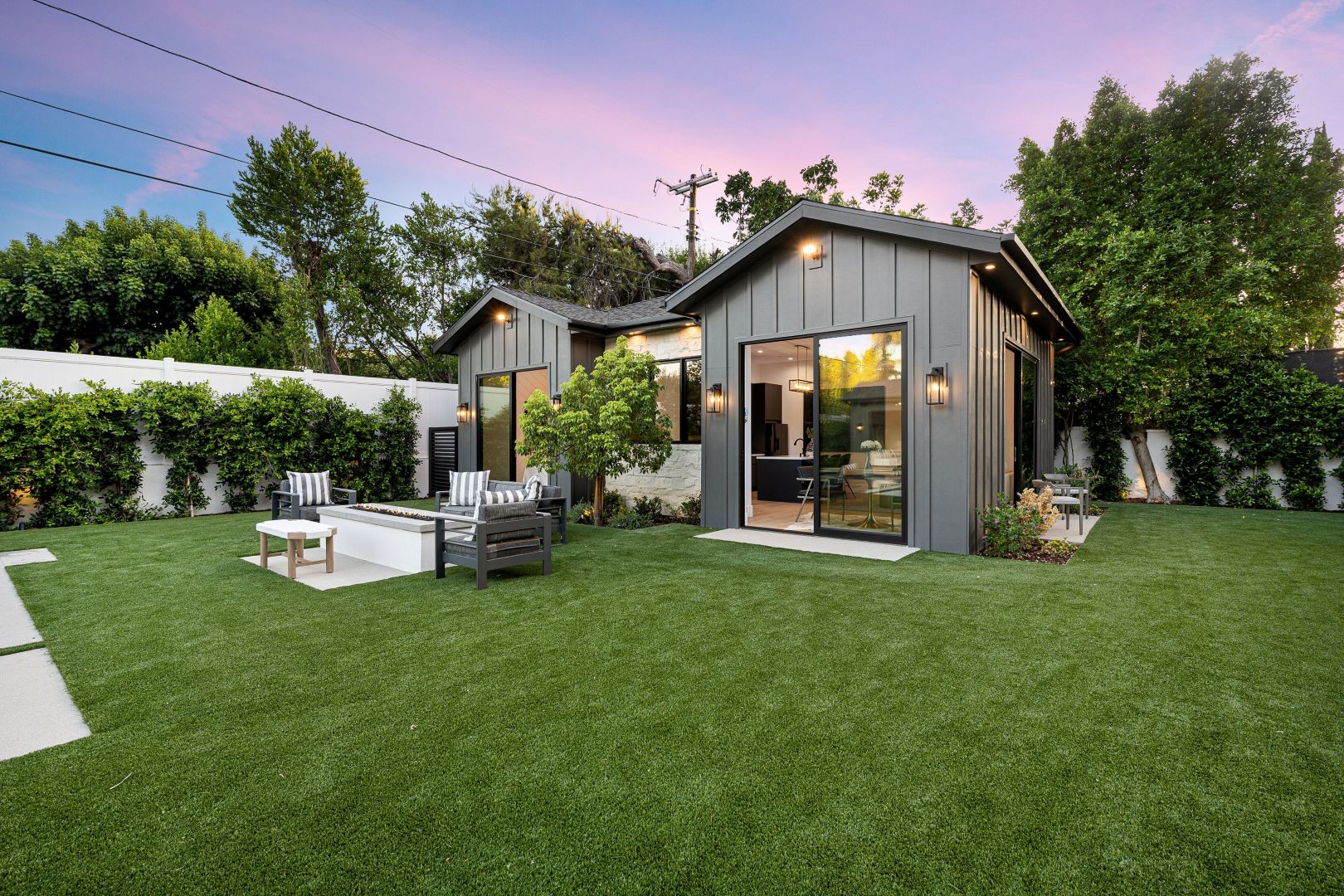
If you own a home in Melbourne with a decent-sized backyard, a recent change to Victoria's planning rules has made it easier to turn that space into a rental income stream.
The Victorian Government has removed the planning permit requirement for small second homes of up to 60 square metres (sqm) in most residential zones. For Melbourne homeowners who have been sitting on a suitable block without a clear path to building, that change opens up an option that was previously too time-consuming and uncertain to pursue.
This article is general information only and does not constitute financial, legal or tax advice. We recommend seeking advice from a qualified accountant and solicitor before making any decisions.
What has changed?
Until recently, building a small second dwelling on your property required navigating the same planning permit process as larger residential developments. This process could be time-consuming, costly and uncertain in outcome.
The Victorian Government has removed that barrier in most cases. A small second home of up to 60sqm no longer requires a planning permit in most residential and rural zones, provided there are no flooding, environmental or other special planning controls on the land. A building permit is still required, covering siting, amenity, design and safety, but the planning permit hurdle that stopped many Melbourne homeowners from proceeding has largely been lifted.
The key characteristics of a qualifying small second home are straightforward:
- The dwelling must be 60 square metres or less
- It must be located on the same lot as an existing home
- It must include a kitchen, bathroom and toilet
- It does not require a car parking space
- It can’t be connected to reticulated natural gas
Importantly, it can’t be subdivided or separately sold from the main property, but it can be rented to anyone, including unrelated third parties, under standard residential tenancy arrangements.
Building to generate income
For Melbourne homeowners with a suitable block, a well-positioned granny flat could generate solid rental income. Melbourne unit rents rose 4.8% over the year to March 2026, according to Cotality, with the median unit rent reaching $620 a week.

Vacancy rates remain tight across Melbourne at 1.3%, providing a rental market that continues to work in landlords' favour. For homeowners in Melbourne's established inner and middle rings, where rental demand from singles and couples is consistently strong, a well-built secondary dwelling can generate an income stream from an asset you already own.
While rental income used to be an attractive tax benefit, recent changes have impacted this slightly. The 2026–27 Federal Budget's new build exemption – which preserves full negative gearing for eligible new residential properties – does not apply to granny flats. The Budget papers are explicit: a granny flat built adjacent to an established property is not an eligible new build for negative gearing purposes. Rental losses from a granny flat built after 12 May 2026 can’t be deductible against wages and other income from 1 July 2027. Those losses can still be carried forward and offset against future residential property income, but the immediate tax benefit against your salary is gone.

The income from renting a granny flat remains assessable and the expenses associated with building and operating it, including maintenance, depreciation and a proportion of rates and insurance, are generally still deductible, just not from wages.
Your accountant should confirm the specific deductibility position for your situation before you proceed.
How to finance building a granny flat
There are three main financing approaches available to Melbourne homeowners.
The most common route is equity release from your existing home loan. If you have built up sufficient equity in your property, you may be able to access those funds through refinancing to pay for the construction without needing a separate loan product. At AXTON Finance, we regularly help Melbourne homeowners understand how much equity they have available and whether their current lender or an alternative on our panel offers a more competitive structure for this type of release.
A construction loan is the second option. This a specific loan product where funds are released in progressive drawdowns as each stage of the build is completed, with interest charged only on the amount drawn at any given time. This can reduce holding costs during the build period and can be well-suited to you if you want to keep the granny flat finance separate from your primary mortgage.
For smaller builds where the construction cost is modest, a personal loan or line of credit may also be an option, though interest rates are typically higher than secured lending and the term structure differs. This option can suit homeowners with strong equity who want a simpler, faster funding path without restructuring their primary home loan.
The right approach depends on your existing loan structure, your equity position, the estimated cost of the build and your broader financial goals. Those are the variables we work through with clients at AXTON Finance before recommending a path.
What to consider before you start
Building a granny flat is an undertaking and the financial case needs to stack up. A few things worth working through before committing:
Rental demand in your specific suburb and street
Not all locations support the same rental return, and proximity to public transport, amenity and employment centres will impact your flat’s appeal for tenants.
Site suitability
Block size, orientation, existing structures and access to the secondary dwelling from the street all influence what can be built and at what cost. An architect or draftsperson familiar with Victoria's small second dwelling requirements can give you a realistic picture early.
Ongoing costs and compliance
As a landlord, you will be subject to Victoria's residential tenancy legislation, including minimum standards for rental properties. These obligations apply equally to a granny flat as to a standalone rental property.
Tax position
The income is assessable, expenses are generally deductible and the construction cost may be depreciable. Note that unlike some other new builds, granny flats do not qualify for the Budget's negative gearing exemption – losses cannot be offset against wages from 1 July 2027. Speak to your accountant before you build.
Impact on your main property
A granny flat cannot be separately sold, which means it does not add a separately tradeable asset to your portfolio. It does, however, add to the overall value and income-generating capacity of your existing land holding.
Is this the right move for you?
If you own a suitable Melbourne property and have been thinking about this, the planning hurdle is no longer the obstacle it was. The rental income case is supported by a tight rental market and rising rents. And the finance options give you flexibility in how you fund the project.
If you are looking for a way to generate income from an asset you already own, without buying another property, a granny flat in the current environment could be a good option.
This article is general information only and does not constitute financial, legal or tax advice. We recommend seeking advice from a qualified accountant and solicitor before making any decisions.
Thinking about building a granny flat and want to understand your finance options? Speak to the team at AXTON Finance. Call 03 9939 7576, email getabetterrate@axtonfinance.com.au or get in touch.